Semaglutide
Semaglutide
Semaglutide is a synthetic glucagon-like peptide-1 (GLP-1) receptor agonist that has garnered significant attention in the field of endocrinology and metabolic research. Structurally similar to native GLP-1, semaglutide is designed with modifications that enhance its half-life and resistance to degradation by dipeptidyl peptidase-4 (DPP-4). This peptide binds to and activates the GLP-1 receptor, initiating a cascade of physiological responses that affect glucose homeostasis, appetite regulation, and cardiovascular function. Requires reconstitution before use.
Couldn't load pickup availability
Characteristics
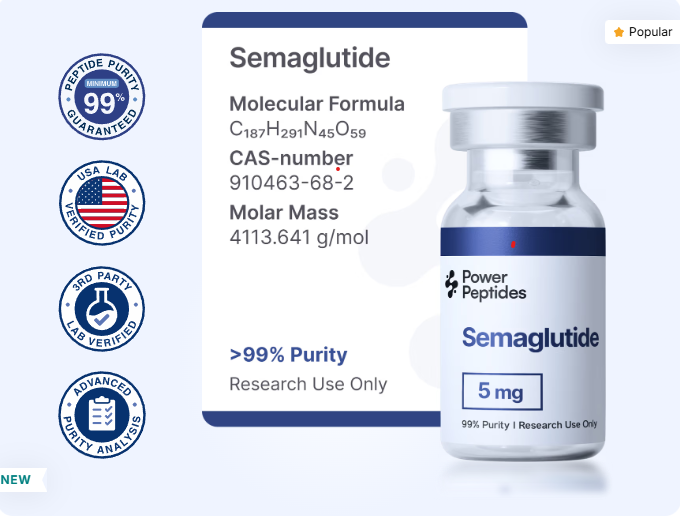
| Molecular Formula | C187H291N45O59 |
| CAS Number | 910463-68-2 |
| Molar Mass | 4113.641 g/mol |
| Amino Acid Sequence | His-Aib-Glu-Gly-Thr-Phe-Thr-Ser-Asp-Val-Ser-Ser-Tyr-Leu-Glu-Gly-Gln-Ala-Ala-Lys-Glu-Phe-Ile-Ala-Trp-Leu-Val-Arg-Gly-Arg-Gly-COOH |
| Synonyms | NN9535, NN9934, GLP1, GLP-1 |
| Solubility | Water-soluble |
| Organoleptic Profile | White to off-white powder |
| Composition | Lyophilized powder - requires reconstitution |
How does Semaglutide work?
Semaglutide exerts its effects through several interconnected mechanisms:
-
GLP-1 Receptor Activation: Semaglutide binds to and activates GLP-1 receptors, which are expressed in various tissues including pancreatic islets, the gastrointestinal tract, and the central nervous system. This activation initiates intracellular signaling cascades, primarily through cyclic AMP (cAMP) and protein kinase A (PKA) pathways.
-
Pancreatic Effects: In pancreatic β-cells, semaglutide enhances glucose-stimulated insulin secretion by increasing intracellular cAMP levels and promoting calcium influx. Simultaneously, it inhibits glucagon secretion from α-cells, contributing to improved glucose homeostasis.
-
Central Nervous System Effects: Semaglutide crosses the blood-brain barrier and acts on GLP-1 receptors in the hypothalamus and brainstem. This central action modulates appetite-regulating neurons, leading to reduced food intake and increased satiety.
-
Gastrointestinal Effects: By slowing gastric emptying, semaglutide helps to reduce postprandial glucose excursions and contributes to the sensation of fullness.
-
Cardiovascular System: While the exact mechanisms are not fully elucidated, semaglutide appears to have direct and indirect effects on the cardiovascular system. These may include improvements in endothelial function, reduction in inflammation, and beneficial changes in lipid metabolism.
-
Metabolic Rate: Some studies suggest that semaglutide may influence energy expenditure, potentially through effects on brown adipose tissue activation, although this area requires further investigation.
-
Hepatic Effects: Semaglutide has been shown to reduce liver fat content in patients with non-alcoholic fatty liver disease (NAFLD), possibly through improvements in insulin sensitivity and lipid metabolism.
The combined action of these mechanisms results in improved glycemic control, weight loss, and potential cardiovascular benefits observed in clinical studies. The complex interplay of these effects underscores the importance of continued research to fully elucidate the therapeutic potential and physiological impacts of semaglutide and other GLP-1 receptor agonists.
Research
-
Glucose Homeostasis: Semaglutide stimulates glucose-dependent insulin secretion from pancreatic β-cells while suppressing glucagon release from α-cells. This dual action contributes to improved glycemic control in individuals with type 2 diabetes mellitus (T2DM).
-
Appetite Regulation: By acting on GLP-1 receptors in the hypothalamus and other brain regions associated with appetite control, semaglutide reduces food intake and promotes satiety.
-
Body Weight Reduction: Through its effects on appetite and potentially other metabolic pathways, semaglutide has been shown to facilitate significant weight loss in clinical studies.
-
Cardiovascular Effects: Research indicates that semaglutide may have beneficial effects on cardiovascular risk factors, including improvements in lipid profiles and blood pressure.
Side Effects
The most common side effects associated with semaglutide include:
-
Nausea Vomiting Diarrhea Abdominal pain Constipation Headache
-
Injection site reactions (for injectable formulations)
These side effects are generally mild to moderate and tend to diminish over time with continued use.
Summary
Semaglutide represents a significant advancement in GLP-1 receptor agonist research, offering a potent tool for investigating the multifaceted roles of GLP-1 signaling in metabolic and cardiovascular physiology. Its demonstrated efficacy in glycemic control, weight management, and potential cardiovascular benefits makes it a valuable subject for ongoing research in the treatment of T2DM, obesity, and related metabolic disorders. As investigations continue, semaglutide may provide insights into novel therapeutic strategies for addressing the growing global burden of metabolic and cardiovascular diseases.
Storage & Handling
Recommended Storage Conditions
- Store refrigerated at 2–8°C unless otherwise specified
- Protect peptide material from moisture and excessive light
- Keep vials sealed until laboratory use
- Avoid repeated freeze-thaw cycles after reconstitution
Laboratory Handling Practices
Semaglutide peptide should be handled using appropriate sterile laboratory techniques and standard research protocols to maintain sample integrity and experimental reliability.
Frequently Asked Questions About Semaglutide
What is Semaglutide?
Semaglutide is a synthetic peptide analog related to glucagon-like peptide-1 (GLP-1) and is referenced in peptide signaling and receptor interaction research literature.
How is Semaglutide supplied for research?
Semaglutide research compounds are typically supplied as lyophilized powder in sealed laboratory vials to maintain stability during storage and transportation.
Why are peptides supplied in lyophilized form?
Lyophilization removes water from peptide solutions under controlled vacuum conditions, producing a stable dry peptide preparation suitable for long-term storage and laboratory preparation.
References
Certificate of Analysis (COA)

HLPC

**Semaglutide 5mg Lyophilized Powder Vial – Dosage, Reconstitution, and Usage Instructions**
### 1. Reconstitution (Mixing) Instructions for 5mg Vial
Use only **Bacteriostatic Water for Injection (BAC water)**. Never use regular water or saline.
**Recommended reconstitution (standard 2.5 mg/mL concentration):**
- Add **2.0 mL** of BAC water to one 5mg vial.
- Resulting concentration: **2.5 mg/mL**
**Step-by-step reconstitution (sterile technique):**
1. Allow the 5mg vial and BAC water vial to reach room temperature (about 10 minutes).
2. Wipe both vial tops with an alcohol swab.
3. Using a sterile syringe, draw **2.0 mL** of BAC water.
4. Slowly inject the water along the inner wall of the 5mg vial (do not spray directly onto the powder).
5. Gently swirl the vial until the powder fully dissolves (do not shake).
6. Store the reconstituted solution in the refrigerator (2–8°C / 36–46°F). Use within **28 days**.
### 2. Standard Dosage Titration Schedule (Weight-Loss Protocol)
Administer **once weekly** by subcutaneous injection on the same day each week.
| Week | Weekly Dose | Purpose | Notes |
|---|---|---|---|
| Weeks 1–4 | 0.25 mg | Starting dose | Allows body to adjust; side effects common |
| Weeks 5–8 | 0.5 mg | First increase | — |
| Weeks 9–12 | 1.0 mg | Intermediate dose | — |
| Weeks 13–16 | 1.7 mg | Near maintenance | — |
| Week 17 onward | 2.4 mg | Maintenance dose (max) | May stay at 1.7 mg if tolerated |
Dose increases should only occur if the previous dose is well tolerated. If side effects are severe, delay the increase by 1–4 weeks.
### 3. Precise Dosage Calculation Table (for 2.5 mg/mL concentration)
Use a U-100 insulin syringe (0.3–0.5 mL, 31–32G recommended).
| Desired Weekly Dose | Volume to Inject (mL) | Units on U-100 Syringe | Notes |
|---|---|---|---|
| 0.25 mg | 0.10 mL | 10 units | Starting dose |
| 0.5 mg | 0.20 mL | 20 units | — |
| 1.0 mg | 0.40 mL | 40 units | — |
| 1.7 mg | 0.68 mL | 68 units | — |
| 2.4 mg | 0.96 mL | 96 units | Maintenance dose |
**Formula for any dose:**
**Volume (mL) = Desired dose (mg) ÷ Concentration (2.5 mg/mL)**
**Units = Volume (mL) × 100**
### 4. Subcutaneous Injection Method
- **Injection sites** (rotate each week): Abdomen (at least 2 inches from navel), outer thigh, or back of upper arm.
- **Steps**:
1. Wipe the injection site and vial top with an alcohol swab.
2. Draw the exact dose into the syringe and remove air bubbles.
3. Pinch a fold of skin, insert the needle at a 45–90° angle, and inject slowly.
4. Hold for 5–10 seconds, then withdraw the needle and press the site gently.
- Dispose of used needles in a sharps container.